Quicktime Player For Mac Screen Recording
How to Record Your Screen With Quicktime Player on macOS QuickTime Player, the default media player for Mac OS X, also has some powerful recording capabilities. Whats the best emulator for mac. With the recording features, you can create brief tutorials for your students that demonstrate common tasks they need to know how to complete on their computers (saving assignments, navigating the class website, etc.).
Authy or google authenticator for mac login. Unlike QuickTime Player, Screenflick is a real screen recording application for your Mac which has a wealth of features to control the recording and exporting,.
► Download QuickTime 7.7.9 To create a new screen recording with QuickTime Player: Step 1: Launch QuickTime Player and choose File, New Screen Recording (the keyboard shortcut is Control, Command, N). Step 2: Press the Record button. Step 3: A screen with additional instructions will appear. Choose Start Recording and begin your tutorial. Step 4: When you’re finished, click on Stop Recording on the Menu Bar. Step 5: To edit your recording, click on the arrow on the right side of the QuickTime controller at the bottom of the window and choose Trim.
Step 6: Drag the handles to select only the frames you want to keep in your recording. Step 7: When you’re happy with your selection, choose Trim. The grayed out frames will be removed from the beginning or end of your recording. Step 8: To save your edited tutorial, choose File, Save As.
Step 9: Select a format and save location, then choose Save. Your tutorial will be ready for upload to a website where students can access it. If you have any question about this, you can feel free to leave them to comment section below or post in our group and I will try to reply when I'm free.
For more information please visit this link. ► YT— ► G+— ► Page— ► Group—.
I like QuickTime X a lot. I’ve been using its screen recording feature to help out my less tech-savvy acquaintances since it was introduced in Snow Leopard. For Lion, Apple’s upped the ante a good bit on what you can do with this, and I’m here to show you what’s new and how to use it. We’ll have fun, so don’t you worry your pretty little heads about that. If you aren’t already familiar with the program, QuickTime is Apple’s video player. It does a lot more than that, however—you can make audio and movie recordings with it, do some basic video editing, and export your creations to different websites and applications.
The screen recording feature is my favorite thing about it, though. Whenever you need to show your Uncle Ronnie just how to access iTunes’ preferences or how to edit that document you sent him, a video is an invaluable tool for doing so, especially for the folks that have a hard time with e-mailed instructions. Plus, let’s face it—sending a how-to video earns you major geek points, and who wouldn’t want that? So go to your Applications folder and open QuickTime Player.
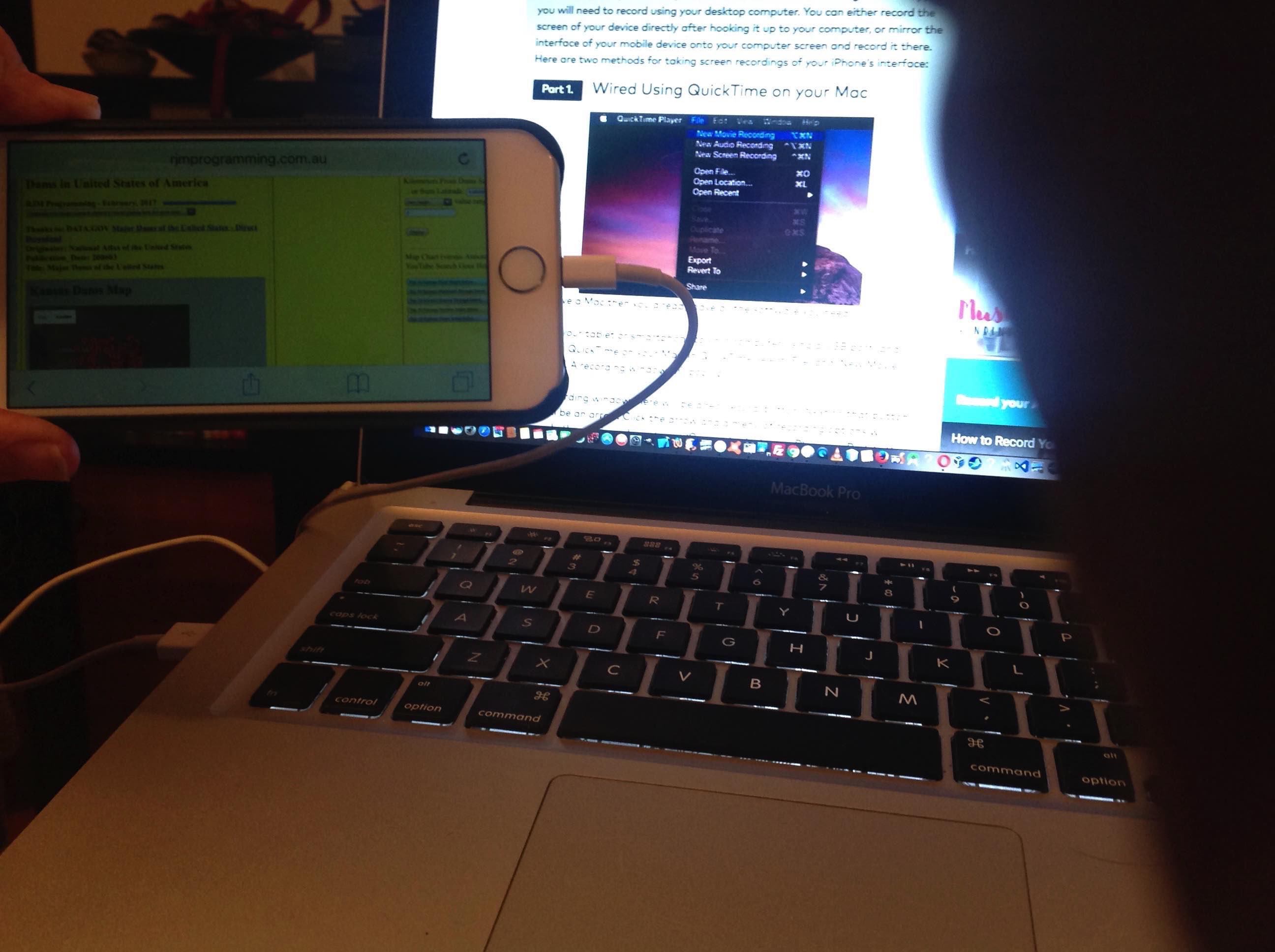
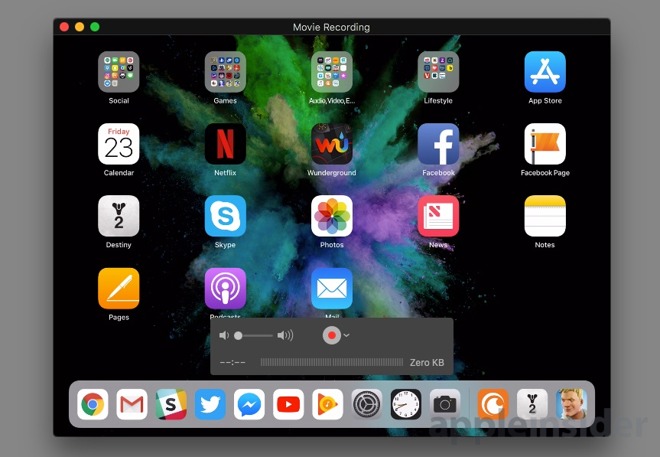
(If you see QuickTime Player 7 there, too, that’s not what we’re looking for—that’s an older version of the software.) If you haven’t opened the program before, you’ll probably just see the menu bar appear. From there, choose File > New Screen Recording (or hit Control-Command-N). You’ll get a little black Screen Recording window from which to control your options and start recording. When you click the drop-down arrow, you’ll see even more stuff you can change, including the location where your movie will be saved. Make sure to toggle the “Microphone” option off of “None” if you’d like your viewers to be able to hear you talk while they’re watching your video. The choice I have highlighted above—“Show Mouse Clicks in Recording”—is an especially helpful new feature in Lion. With this, clicking on something during the recording will make a small circle appear briefly around your cursor to give your audience a visual cue about where you’ve clicked. Another shiny new plaything is the ability to choose an area of your screen to record rather than having to make a video of the entire thing (as was the case in Snow Leopard).