Persistent Usb Ubuntu Drive For Mac
Installation help for the Mod and Forge for Windows AND Mac! Home Downloads Guides Chats Gallery. Install OreSpawn, and how to make a Minecraft server with OreSpawn! Above is a quick video on how easy it is to download and install Forge and any mods for Mac. If you prefer video, watch this. If you prefer text, directions are below. Minecraft orespawn mod wiki. The creator of the mod said he will not update anymore because he will create his own game on the mod due to the limitations of minecraft if they want to download the game they should know that it is just being updated (this is like the alpha versions of minecraft) and I am in favor of that decision because minecraft has many limitations. DrCyano’s Ore Spawn mod 1.12.2/1.11.2 is a Minecraft mod library that provides a way to help you better control the spawning rate of Ores in Minecraft. DrCyano’s Ore Spawn created all the config information of the spawning rate of Ores in Minecraft and save that information in the files within the folder.json config / orespaw.
When you create a, it lets you access a live session of the OS apart from allowing you to install the OS on your system. This is really useful when you want to do something and don’t have an operating system installed on your PC. This is also helpful if your PC refuses to boot. There can be many other similar situations, but this live session has one problem. Everytime you boot, it’s a blank slate.
You can install programs, make changes to the OS, customize it, but as soon as you shut down, all the changes are lost. This is good for most people, but if you want a system that picks up where you left off, you can create a persistent Ubuntu USB. What is a persistent Ubuntu USB It’s a bootable Ubuntu USB but with persistent storage. As the name suggests, the user data from the live session is persistent, i.e., it does not disappear after reboot. This is done via a persistent overlay file which stores all the information about the changes.
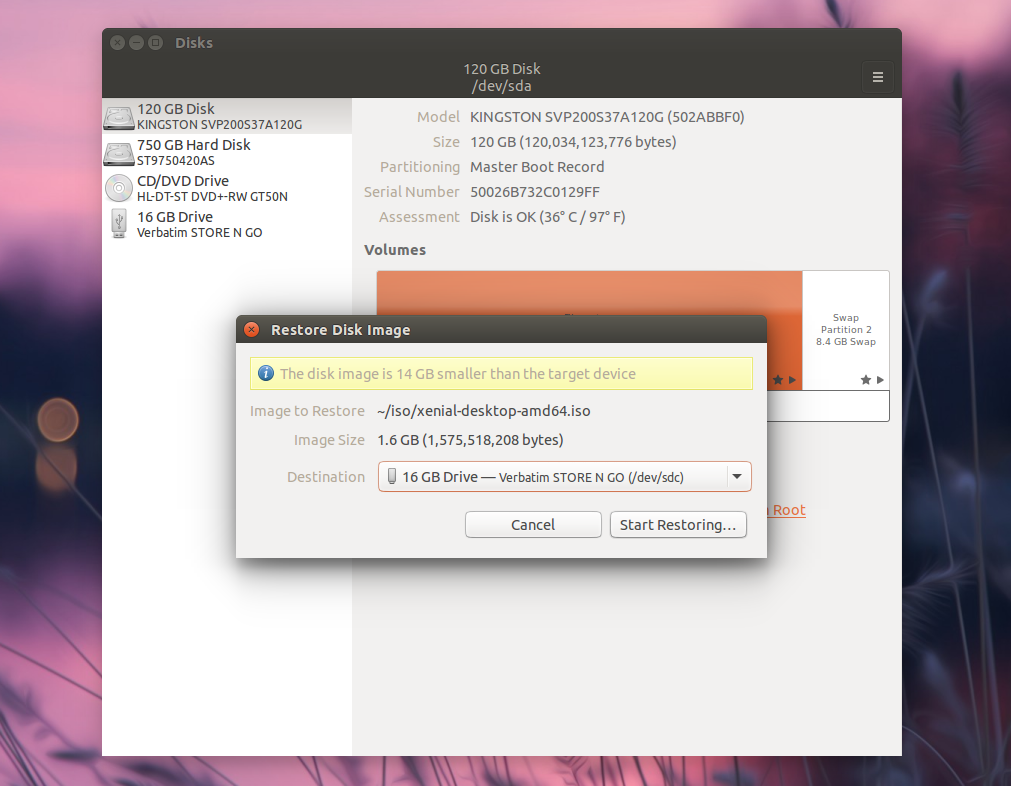
How to Setup a USB Drive that Can Run or Install Ubuntu. By Matt Hartley, Posted April 22, 2013. If you're on Windows or a Mac and would like to give Ubuntu a try, follow these steps to install Ubuntu on a USB drive. If you don't want to install Ubuntu onto your hard drive, you can select the persistent data option, then choose the amount.
Any programs you install, the settings you change, are all written to this file. You’ll have to allocate a part of your USB storage to this persistent file. You can theme the system, but you cannot change any system files such as the kernel. You won’t be able to install major system upgrades, such as an update from Ubuntu 17.04 or 17.10 to 18.04.

Additional hardware drivers also cannot be installed. Other than that you can do pretty much everything else. You can install programs, update them, save your files, customize your OS, it’s pretty much like carrying your OS on your USB. All you need is the hardware to boot it up and use it. This can be anyone else’s computer or other computers you may have around. You won’t have to start from scratch each time you boot your Ubuntu live session. Persistence does not work with all Linux distributions but it does work with and Ubuntu based systems.
Must read: How to create a persistent Ubuntu USB To create a persistent Ubuntu USB, you will need the mkusb tool which is easy to install if you’ve installed programs on Ubuntu before. You’ll need to do this via the official ppa using the terminal.
Before you can do this though you’ll also need to enable the universe repository for your Ubuntu system if you haven’t already. You can do this via the graphical interface but simply pasting the command below in a terminal would be much easier. Sudo add-apt-repository universe • To install mkusb, enter the following commands one by one. Sudo add-apt-repository ppa:mkusb/ppa sudo apt-get update (Ubuntu 18.04 users can skip this step) sudo apt-get install mkusb This will install the GUI version of mkusb. • Run the tool via the Terminal using this command. Sudo -H mkusb /path/to/iso/filename.iso p Replace /path/to/iso/filename.iso with the path to the Ubuntu ISO file and the correct file name. For instance, sudo -H mkusb ubuntu-18.04-desktop-i386.iso p • You’ll be provided with a list of options, type e and hit enter.
Find missing font word for mac used in style. See where styles are applied in a document in Word for Mac. Text in the 12 point Cambria font and text formatted using the Normal style, which by default also uses the 12 point Cambria font, look identical. The colors and numbers attributed to each style are automatically determined by Word and may differ between documents and may. I still think Microsoft should at least give users an option in Preferences that brings up an alert saying fonts are missing when a new document is opened. Not everyone wants automatic and unannounced font substitution. It causes no end of problems! Ironically, Word 2004 used to show these alert messages. Here’s how to fix MS Word missing fonts issue in Mac: Step 1: Quit all Microsoft Applications. Step 2: Go to Finder > Go > Go to Folder. Insert the following path: Library Preferences Microsoft Office 2011. Replace ‘2008’ with whichever version of Microsoft Word you have. Step 3: Click and drag the ‘Office Font Cache 2011’ file into the trash.
• In the new window that opens up, click on Select target device: • Click on the USB drive that you want to install the Ubuntu ISO to with persistent storage and click OK. • Make sure you have selected the right drive because the process will wipe all the data on the drive. When you’re ready, check the checkbox as shown below and click Go. • In the dialogue box that appears next, select Quit from this menu. This will let mkusb choose the default option. • Next, select the percentage of storage you want to allocate for persistence. If you have enough space on your USB like I had with a 32GB USB, 20 would be a good number to enter here.