Import Web Page Data Into Excel For Mac
Use Microsoft Query to connect to a data source and to create a query. When you have finished, click Return Data to import the data into Excel. For more information about connecting to a data source and using Microsoft Query, see Microsoft Query Help. In this guide, I will walk you through the process of dropping a web query into an Excel file on a Mac. Step 1: Create the Web Query File In order to call a web query on the Mac version of Excel, the query needs to exist in a specially formatted text file.
» » How to feed live data from a web page into Excel There are two ways you can feed live data from a web page into Excel. The easiest just entails. However, you can perform more sophisticated operations using a. You can capture data which is held in a table or as preformatted text (inside the HTML or tags). You can easily import a table of data from a web page into Excel, and regularly update the table with live data.
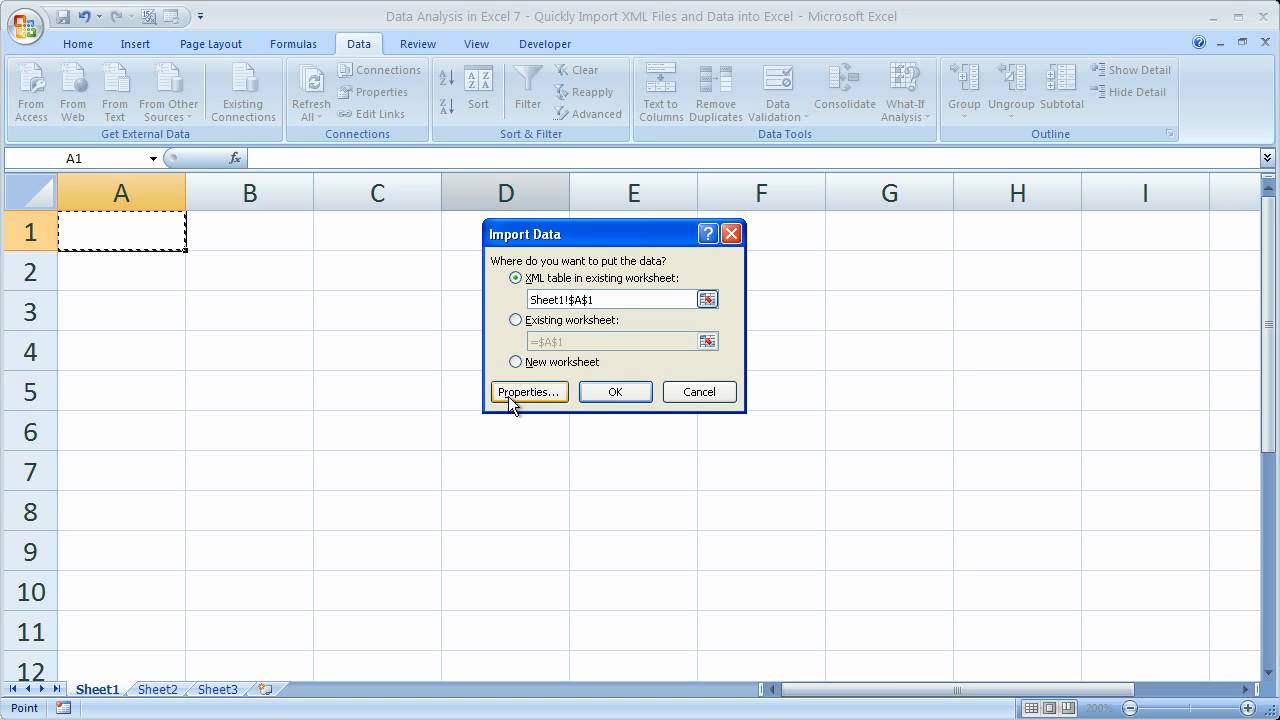
• Open a worksheet in Excel. • From the Data menu select either Import External Data or Get External Data. • Select New Web Query. • In Excel XP: • Enter the URL of the web page from which you want to import the data and click Go. • Choose the table of data you wish to import, then click the Import button.
• In Excel 2000: • Fill in this dialogue with the URL of the web page, the table of data you want and the formatting you want to keep. • Choose how often you want to refresh the data. From the Data menu select Import External Data again, then choose Data Range Properties. This method is also useful for capturing static data from a web site. The data will be reliably imported into correct columns and rows in Excel. If you merely copy and paste data from a web page to Excel, you sometimes find the entire row of data is in one cell. (Using the Paste Special command will often also achieve this, but not always.) For more flexibility in importing data use a web query file.
This is a text file with the extension.iqy. Its contents looks like this: Selection=2 Formatting=None • The first line is the URL of the page holding the data. In our example current weather conditions in Manchester, from the msn.com site. • The second line is blank. • The third line sets which table of data to import, in this case the second table on the page.
It takes the form selection=. For more details. • The fourth line specifies that any formatting on the web page should be ignored. • To use this text file, • In Excel 97 and XP, from the Data menu select Import External Data. • Select Import Data and choose your.iqy file. • Choose where to put the data and click OK. The live data appears in your spreadsheet.
• In Excel 2000, from the Data menu select Get External Data • Click Run Saved Query • Select the.iqy file you have created and choose where to put the data. Selection=AllTables, Selection=EntirePage and Selection='name of table'. To find the name of a table you will have to look at the source code of the page. Best vpn for mac cnet. For more than one table, separate the table names or numbers with commas.
100% compatible Mac Windows iOs Android. Timecycles.com 25-Jul-2014 A website dedicated to time cycles analysis and astro economics. Astrology software mac. Www.astro-quick.com 17-Sep-2014 Time Cycles is acknowledged as the leading developer of Mac Astrology software programs for astrologers of every level of experience for more than 28 years. Astrology software and reports since 1993. Www.astro-trading.net 22-Jan-2011 TimePassages professional Astrology Software for Windows and Mac OS X generates astrology charts and reports with insightful interpretations.
Formatting=None returns plain text without any formatting. You could also use formatting=All, to copy all the fonts and hyperlinks in the web page to the Excel sheet. Finally you could use Formatting=RTF, to keep most of the formatting put not the hyperlinks.