How To Savew A Word Document For A Mac
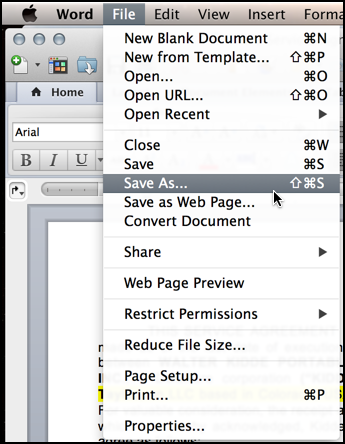
Or maybe you want to save an Office 2011 document so that it’s compatible with older versions of Word. The Word Save As options can accommodate these needs and more. Just close the Word document. This may seem somewhat obvious, but Word keeps track of whether a document’s been changed since it was opened last. Turn on compatibility mode. Open a new document. On the File menu, click Save As. In the Save As box, type a name for the document. In the Format pop-up menu, select Word 97-2004 Document (.doc), and then click Save. [Compatibility Mode] appears in the title bar after the document name.
Self control application for mac. Documents created in Microsoft Office for Mac are generally compatible with Microsoft Office for PC. Both Office for Mac and Office for PC are Microsoft products and, in most cases, you simply double-click on the Mac Office document to open the document in Office on the PC. However, in some cases, the document created on the Mac may not open on the PC.
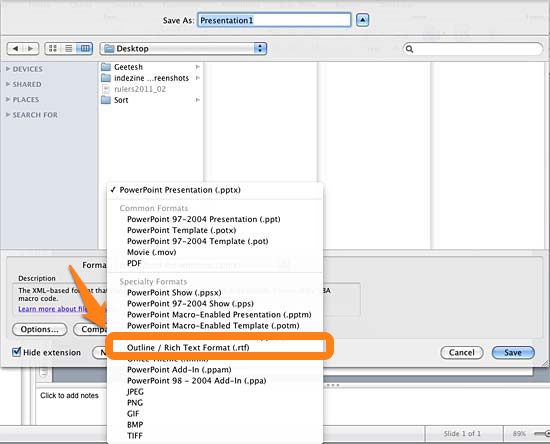
In these cases, you can save the document in a format that will be recognized by Microsoft Word on the PC. Save the document in the “Rich Text Format” and the document that was created on the Mac will open in Word on the PC.
Sometimes when managing word processing or text documents you might want to save the file in a compressed JPEG format or other similar picture format. I was recently asked how to do this by a Mac user, who was looking for a way to better manage a text document for presenting it in Web pages, but who was also interested in placing a formatted text file as an object in presentations and other Word processing documents. Not only does converting a text file to an image allow for easier handling when embedding in other documents, but it also allows for easier drawing of annotations and other items on the document when discussing and presenting it. There are a couple of ways to save documents to an image format. Sometimes programs may specifically support saving to a JPEG, TIFF, or other rasterized format, but since many don't you can take advantage of a couple of technologies built in to OS X that will allow you to do this. The first is the use of screenshots, which is an excellent way to quickly snap a sample picture of the screen, a window, or a selection of the screen. You can then import the resulting image (by default it's a PNG file) into numerous applications.
While screenshots are useful and convenient, they're limited primarily because the screen resolution on Macs is 72 dots per inch, which means the resulting picture will also be 72 dots per inch. This cuts down on file size, but it also limits the uses of the file to being presented on screen. If you print the file or wish for finer detail of the text by having higher resolution, you can't do this with a direct screenshot.
In addition, screenshots are limited to what you see on screen, so if you have a well-formatted document that goes beyond the limits of the screen, then you cannot capture it in an image file using screenshots. Nevertheless, screenshots have their uses and can be particularly useful for illustrating aspects of what you see on screen. For more details on screenshots see. Using a PDF intermediary The format and resolution settings are available here when saving as an image from Preview. The next option is a more versatile option for creating a rasterized image of a text document, which is to convert it initially to a PDF and then to one of many image types. In OS X (or in any supported OS that has Adobe PDF installed) this can be done with practically any printable document by printing the file and then using the 'PDF' menu in the print dialogue box to either save the PDF or view it directly in Preview. With the document now open in Preview, you can select 'Save As' from the File menu and in the Format window choose one of a number of supported rasterized image formats, including GIF, JPEG, PNG, BMP, and TIFF.